When talking about AI tools for export businesses in 2026, international trade is becoming more technology-driven. Exporters can now use AI to research markets, communicate with overseas buyers, translate business documents, analyze trade data and organize everyday work. These tools do not replace export expertise, but they can reduce repetitive tasks and help businesses work more efficiently across borders.
Running an export business involves much more than finding a foreign buyer. Businesses need to research demand, identify suitable markets, prepare quotations, communicate across languages, manage documents and keep track of changing trade requirements. The right AI tools can help exporters spend less time on routine work and more time developing international business relationships.
Advantages of AI Tools for Export Businesses
Export operations often involve large amounts of information and repeated communication. AI can help businesses organize that information and create useful first drafts, summaries and research outputs.
For small and medium-sized exporters, this can be particularly useful because a small team may be handling sales, documentation, marketing and customer communication at the same time.
- Faster international market research
- Easier buyer and supplier research
- Better multilingual communication
- Faster preparation of business documents
- Reduced repetitive administrative work
- Better analysis of trade and sales data
- More efficient international customer follow-ups
| Export Business Task | How AI Can Help |
|---|---|
| Market research | Analyze markets and summarize information |
| Buyer research | Find and evaluate potential companies |
| Communication | Draft professional international emails |
| Translation | Translate documents and messages |
| Documentation | Prepare first drafts and templates |
| Data analysis | Identify trends in spreadsheets and reports |
| Marketing | Create product and promotional content |
AI works best as an assistant for export teams, while final commercial, legal and compliance decisions remain with qualified professionals.
Below are the best AI tools for export businesses in 2026 & beyond –
1. ChatGPT
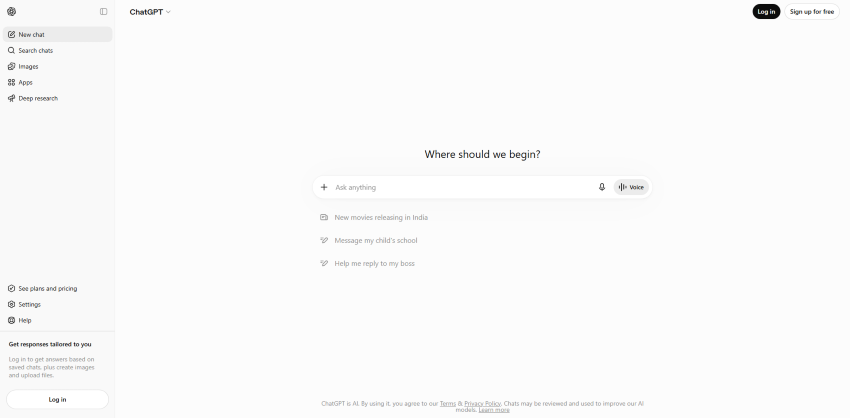
ChatGPT can be a versatile AI assistant for exporters handling research, communication and everyday business tasks. It can help create buyer outreach emails, product descriptions, quotation templates, follow-up messages, meeting summaries and marketing content. It can also analyze uploaded spreadsheets and help users understand business data. OpenAI documents data-analysis capabilities for working with tables and business information.
For an export business, this flexibility can be valuable because international sales involve many different types of communication. An exporter can use it to create a first draft for a buyer in the USA, rewrite product information for a European audience or summarize a long document before reviewing it.
The important point is to use ChatGPT for assistance rather than treating its output as automatically correct. Product specifications, prices, customs requirements, trade regulations and contractual information should be checked against authoritative sources before being shared or acted upon.
Website Link – https://chatgpt.com/
2. Microsoft Copilot
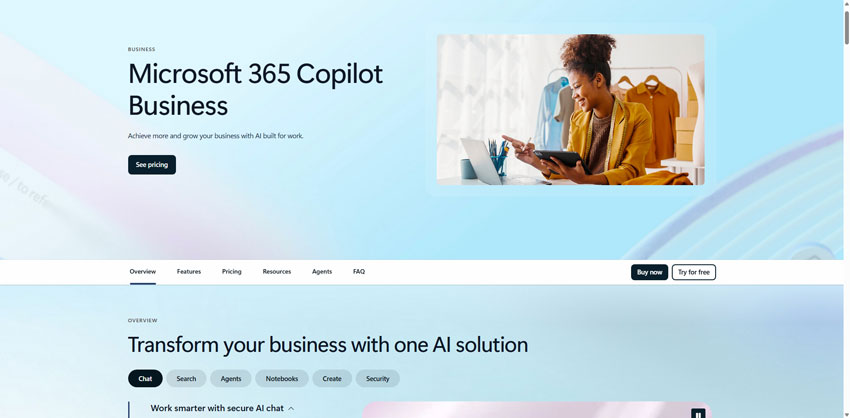
Microsoft 365 Copilot is designed to bring AI assistance into workplace applications such as Word, Excel, PowerPoint, Outlook and Teams. Microsoft says Copilot can work with business data, provide AI-powered search, assist with research and data analysis, and help create and organize content.
This can make it useful for export companies that already depend on Microsoft 365. Sales teams can use it to prepare email drafts, while managers can work with spreadsheets and reports more efficiently. Teams can also use it to summarize discussions and organize information from everyday business activities.
For exporters, the biggest advantage is that AI assistance can fit into tools they already use rather than requiring a completely separate workflow. Businesses should still establish clear rules about confidential customer information, pricing data and sensitive trade documents before using AI across their organization.
Website Link – https://www.microsoft.com/en-in/microsoft-365-copilot/business
3. DeepL
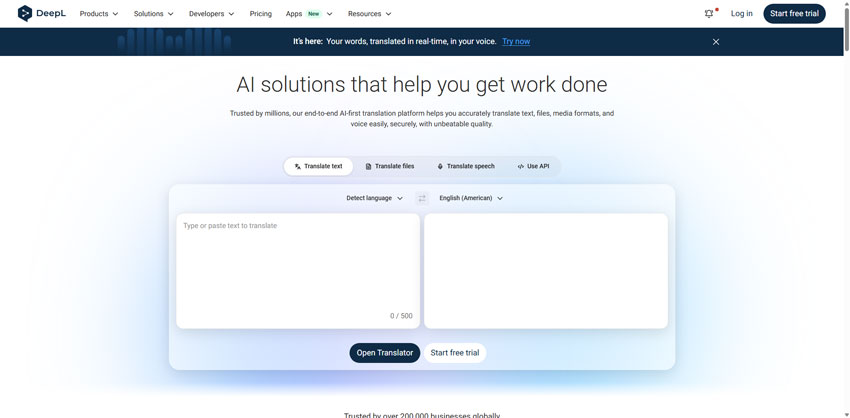
DeepL is an AI-powered translation platform designed for multilingual business communication. It supports text and document translation, including formats such as PDF, Word and PowerPoint. DeepL also provides business features designed around translation workflows, terminology and brand consistency.
For export businesses, language can become a practical obstacle when communicating with distributors, importers and customers in different countries. DeepL can help teams translate product information, emails, documents and other materials more efficiently.
This is especially useful for exporters targeting multiple international markets. A company can prepare its core information and then adapt it for different languages while maintaining consistent terminology. Human review is still important for contracts, technical specifications, regulatory documents and other information where a translation mistake could have commercial consequences.
Website Link – https://www.deepl.com/
4. ExportIQ
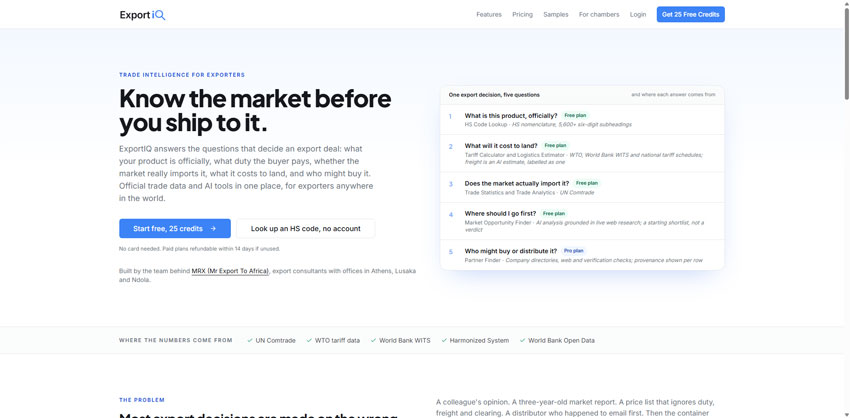
ExportIQ is a trade-intelligence platform built specifically around international trade research. Its website describes tools for finding importers, checking HS codes, calculating tariffs, researching markets and identifying potential business partners using trade data. It says its platform connects information from customs authorities, UN Comtrade and TradeMap.
This type of specialized tool can be useful when an exporter wants information that a general-purpose AI chatbot may not have. Instead of asking a general AI model to guess which market might be suitable, exporters can use trade-data-focused tools to investigate actual import activity and potential partners.
The platform can therefore support the early stages of international expansion, from identifying target countries to researching potential buyers. Trade intelligence should be treated as research that supports commercial decisions, not as a guarantee that a particular buyer or market will generate sales.
Website Link – https://exportiq.ai/
5. TradeImeX
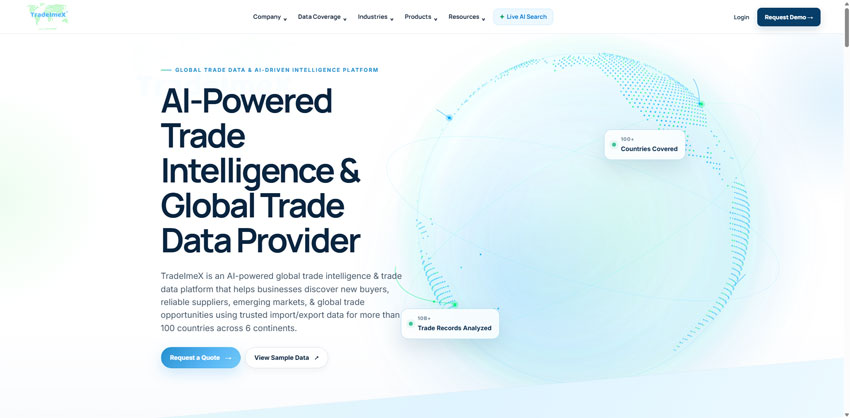
TradeImeX provides import-export trade data and business intelligence for exporters, importers and analysts. Its platform offers features including buyer discovery, competitor analysis, country trade reports and shipment-level information. In 2026, TradeImeX introduced an AI search experience that allows users to ask business questions rather than manually working through numerous filters.
For an exporter, trade intelligence can help answer practical questions before investing heavily in a new market. Businesses can research companies, products, countries and trade patterns to build a clearer picture of potential opportunities.
This can also help sales teams make their prospecting more focused. Instead of contacting completely random companies, exporters can use available trade information to identify businesses that appear relevant to their product category. Always verify buyer information independently before entering into contracts, extending credit or shipping goods.
Website Link – https://www.tradeimex.com/
Why Export Businesses Have to Use AI Tools in 2026
Export businesses deal with a constant flow of information. Market research, buyer communication, quotations, product descriptions, translations, spreadsheets and documentation can consume significant amounts of time. AI can assist with many of these activities, allowing teams to move from one task to another more efficiently.
AI is also becoming relevant to the broader trade ecosystem. A 2026 UNECE paper on export-control and compliance procedures highlights digital technologies, including AI and automation, as potential ways to improve compliance efficiency and trade processes.
For exporters, however, adopting AI does not mean handing important decisions entirely to software. AI-generated information should be checked against official government, customs, banking, shipping and destination-market sources before it is used for a transaction.
This is particularly important for HS classifications, tariffs, export controls, product certifications and other compliance-related matters. Requirements can change, and an outdated answer can create unnecessary costs or delays.
Conclusion
AI tools for export businesses in 2026 can support almost every stage of international sales, from market research and buyer discovery to multilingual communication, data analysis and daily administration. General-purpose tools such as ChatGPT and Microsoft Copilot can support productivity, while specialized platforms can provide trade-focused information.
The strongest approach is not to automate every part of exporting. Instead, businesses should identify repetitive tasks where AI can save time and use specialized tools when reliable trade information is required.
For exporters, the real advantage of AI is the ability to work faster while keeping human expertise, verification and business relationships at the center of international trade.
As global markets become increasingly competitive, exporters that combine AI-assisted workflows with accurate information and strong customer relationships can build a more organized and scalable international sales process.
FAQ
Q1. What are AI tools for export businesses?
AI tools for export businesses are software solutions that help with market research, buyer discovery, communication, translation, documentation, data analysis and other international trade activities.
Q2. How can AI help an export business find buyers?
Specialized trade-intelligence platforms can analyze import and export data to help identify companies and markets relevant to a particular product. Exporters should independently verify potential buyers before doing business.
Q3. Can AI help with export documentation?
Yes. AI can help create first drafts of documents, organize information and summarize requirements. However, final documents should be checked against applicable customs, banking, shipping and regulatory requirements.
Q4. Can AI translate export documents?
Yes. Tools such as DeepL can translate text and business documents into different languages. Important legal, technical and regulatory documents should receive appropriate human review.
Q5. What is the best AI tool for an export business?
There is no single best tool for every exporter. ChatGPT and Microsoft Copilot are useful for general productivity, DeepL for multilingual communication, and specialized trade-intelligence platforms such as ExportIQ and TradeImeX for trade research.