
When talking about AI tools for insurance agents in 2026, the insurance industry is entering a practical new phase. Agents are using technology to reduce repetitive paperwork, respond to customers faster, organize leads and prepare for client meetings. The real value comes from using AI where it saves time without weakening professional judgment.
Insurance work involves sales, renewals, documentation, follow-ups and customer service. Across India and the USA, customers increasingly expect quick answers and convenient communication. AI can help with these everyday demands, while agents remain responsible for checking policy details, explaining coverage and making decisions that require professional judgment.
Advantages of AI Tools for Insurance Agents
AI is useful because insurance agents spend considerable time on work that is important but repetitive. Email drafting, meeting summaries, data organization and follow-up preparation are examples of tasks where AI assistance can reduce manual effort.
- Faster customer communication
- Less time spent on documentation
- Better organization of leads and customer information
- Easier preparation for renewals and meetings
- More consistent follow-ups
- Support for marketing and business development
- More time for relationship-based selling and service
| Insurance Task | How AI Can Help |
|---|---|
| Customer Emails | Draft replies and follow-ups |
| Lead Management | Organize prospects and outreach |
| Documentation | Summarize notes and create drafts |
| Account Review | Surface useful customer information |
| Marketing | Develop content ideas |
Below are the best AI tools for insurance agents in 2026 & beyond –
1. Applied Epic
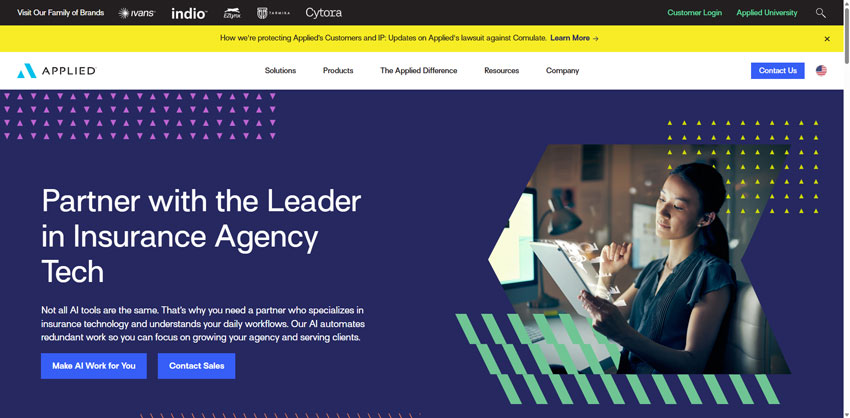
Applied Epic is an agency management platform built for insurance organizations. It brings together information related to customers, policies, activities, renewals and other agency processes, giving teams a central place to manage day-to-day work. Applied Systems has also added AI capabilities, including features designed to assist with email summarization and autofill.
During busy periods, agents can use it to reduce repeated searching and data entry, particularly when managing many renewals, service requests and customer conversations. Having important information organized within the agency workflow can make routine account management easier and more consistent.
Applied Epic is most useful for agencies that want AI assistance built into their core insurance management workflow. Agents should still review generated information and confirm important policy or customer details before taking action.
Website Link – https://www.appliedsystems.com/
2. Salesforce Agentforce
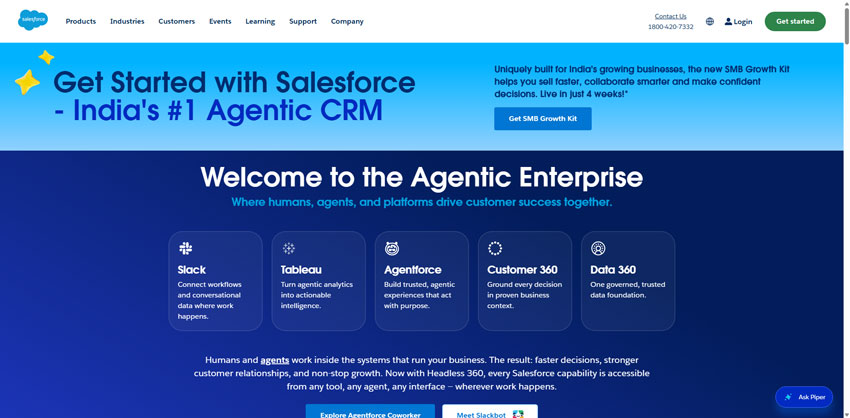
Salesforce Agentforce brings AI agents into CRM workflows, allowing organizations to automate selected tasks and work with customer information more efficiently. Salesforce has also developed insurance-focused capabilities for activities involving policy, account and claims information. In 2026, IndiaFirst Life announced plans to use Agentforce across underwriting, customer service and claims workflows.
For insurance teams, the attraction is the connection between customer data and everyday work. AI can summarize records, support service requests and prepare information for conversations, reducing time spent gathering background details.
The platform is best suited to agencies and larger insurance organizations using a structured CRM. Its strongest value comes when AI is connected to reliable customer data and clear business rules, with people reviewing important outputs.
Website Link – https://www.salesforce.com/
3. ChatGPT
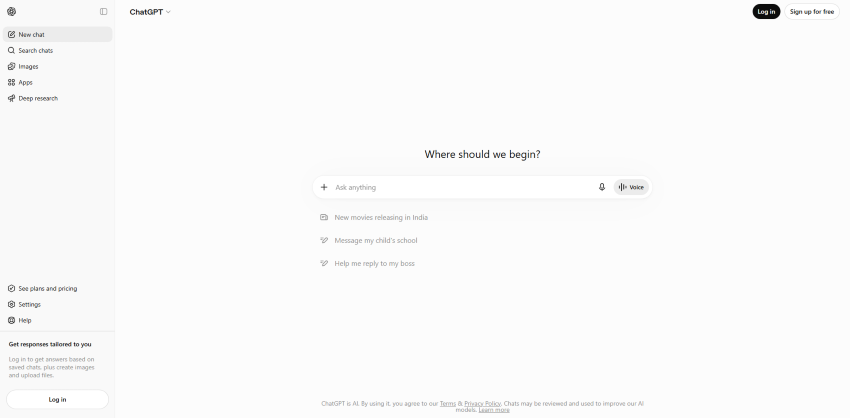
ChatGPT can serve as a flexible writing and productivity assistant for insurance agents. It can help draft customer emails, create follow-up messages, summarize non-sensitive notes, brainstorm marketing ideas and turn rough points into clear communication. It can also help agents prepare questions for client meetings.
The biggest advantage is speed. AI can provide a first draft for recurring messages, which the agent can personalize for the customer. This keeps the human relationship at the center while reducing routine writing time.
ChatGPT can also support internal brainstorming and content planning. Never treat an AI-generated answer as a substitute for checking the actual policy, insurer guidance or applicable regulations. Sensitive customer information should be handled according to the organization’s privacy and security policies.
Website Link – https://chatgpt.com/
4. Applied Book Builder
Applied Book Builder is an AI-powered risk intelligence capability from Applied Systems that can help insurance professionals analyze business information and identify useful account insights. It is particularly relevant for agents working with commercial accounts, where understanding a business may require reviewing substantial information before a conversation or renewal.
Better account intelligence can support more focused conversations. AI may highlight potential cross-selling, upselling or review opportunities, giving the agent a starting point for customer questions.
This can be valuable when agents want to grow existing accounts while continuing to provide good service. AI-generated insights should be treated as prompts for professional review, not automatic conclusions about coverage needs or risk.
Website Link – https://www.appliedsystems.com/
5. Microsoft Copilot
Microsoft Copilot can help insurance agents with everyday office and communication tasks, particularly when teams already work within Microsoft’s productivity ecosystem. Depending on the product and organizational setup, Copilot can assist with drafting, summarizing, organizing information and creating content.
For an insurance agent, this can be useful for preparing meeting notes, drafting follow-up emails, summarizing internal discussions and creating a first version of a document. These small savings can add up across a working week, especially for agents managing many customer conversations.
Copilot can also help turn rough ideas into usable business content. An agent might use it to outline a newsletter or prepare talking points before a meeting. The best results come when the agent reviews, edits and verifies the output before using it.
Website Link – https://copilot.microsoft.com/

Why Insurance Agents Have to Use AI Tools in 2026
Insurance agents have always balanced two sides of the job: building trust with customers and keeping up with administrative work. That balance is becoming harder as customers expect faster replies and agencies manage growing amounts of digital information. AI can take some repetitive work off an agent’s desk, leaving more time for conversations that require experience and judgment.
AI can also support sales activities. Lead research, follow-up drafting, account reviews and marketing preparation can involve repetitive work. Used carefully, AI helps agents move through these tasks more efficiently instead of spending valuable hours on routine preparation.
The wider insurance industry is also moving toward practical AI adoption in areas such as customer service, underwriting and claims. For agents, the goal should not be to automate everything; it should be to automate the right things while protecting accuracy, privacy and customer trust.
Conclusion
AI tools for insurance agents in 2026 are becoming useful working assistants rather than futuristic ideas. They can help agents write faster, organize information, prepare for customer conversations and reduce repetitive administrative work. The right tool depends on an agency’s size, existing software and type of insurance business.
The strongest approach is to combine AI efficiency with human expertise. Customers still want someone who can listen, explain options clearly and take responsibility for the advice they receive. Agents who use AI to remove routine work while keeping professional review at important decision points can build a more efficient and customer-focused workflow.
FAQ
Q1. What are AI tools for insurance agents?
AI tools are applications that assist with communication, documentation, customer information, lead management, marketing and workflow tasks.
Q2. What is the best AI tool for insurance agents?
There is no single best option. Applied Epic and Salesforce Agentforce suit structured insurance workflows, while ChatGPT and Microsoft Copilot support general productivity.
Q3. Can AI help insurance agents save time?
Yes. AI can assist with drafting emails, summarizing information, organizing notes and preparing follow-ups. Results depend on the agent’s workflow.
Q4. Is it safe for insurance agents to use AI?
AI should be used with suitable privacy, security and compliance controls. Agents should verify important outputs and follow their organization’s policies.
Q5. Will AI replace insurance agents?
AI is more likely to change how agents work than eliminate the profession. Relationship building, professional judgment and customer guidance remain important.