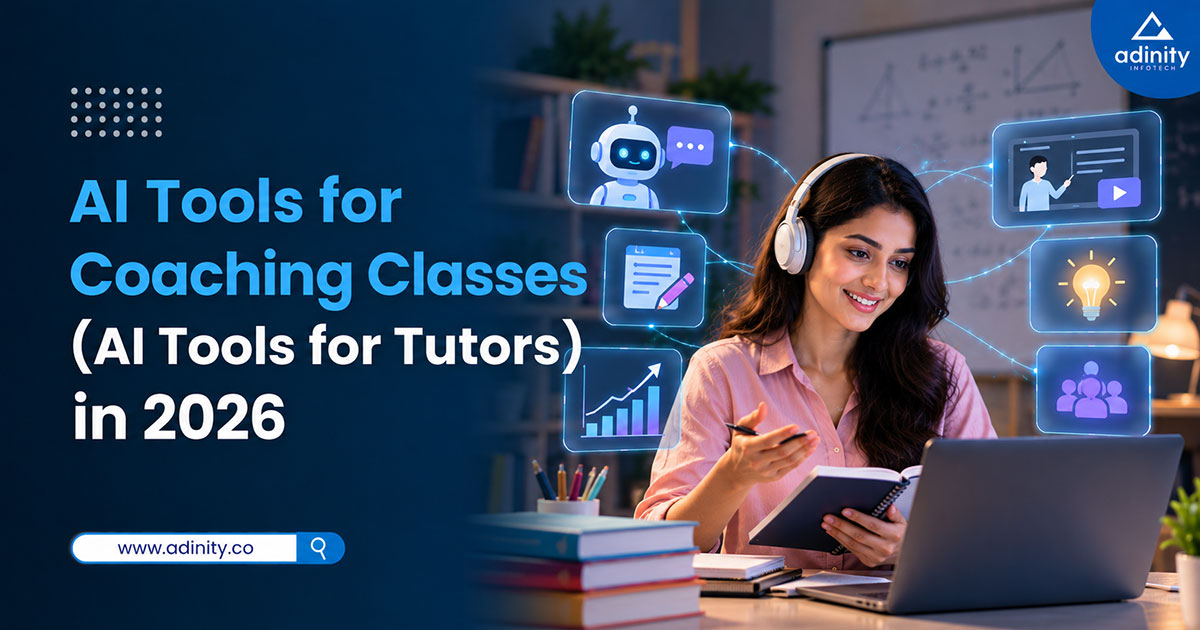
When talking about AI tools for coaching classes in 2026, artificial intelligence is changing how tutors and coaching institutes prepare lessons, create practice tests, explain difficult concepts and manage student learning. From competitive exam preparation to school tuition and online tutoring, AI can help educators create learning materials faster and provide more personalized academic support.
Running a coaching class involves more than teaching a subject. Tutors must prepare notes, develop question banks, check assignments, track student progress and communicate with parents. The right AI tools can reduce preparation time and help tutors focus on teaching, doubt-solving and improving student performance.
Advantages of AI Tools for Coaching Classes
AI can help independent tutors and larger coaching institutes handle repetitive academic tasks more efficiently. It can also make it easier to adapt learning materials for different subjects, examination levels and student abilities.
- Faster preparation of notes and lesson plans
- Automated quiz and practice-question creation
- Personalized explanations for difficult topics
- Easier revision material and mock-test preparation
- Better student progress monitoring
- More engaging presentations and classroom activities
- Reduced administrative workload
- Improved support for online and hybrid classes
| Coaching Class Task | How AI Can Help |
|---|---|
| Lesson preparation | Generate outlines and teaching examples |
| Test creation | Draft MCQs, worksheets and quizzes |
| Doubt-solving | Explain concepts step by step |
| Revision | Create summaries and flashcards |
| Student assessment | Identify learning gaps from results |
| Marketing | Prepare promotional content and messages |
| Parent communication | Draft progress updates and reminders |
AI is most effective when tutors review its output and use it to strengthen their teaching methods rather than replace classroom instruction.
Below are the best AI tools for coaching classes in 2026 & beyond –
1. MagicSchool AI
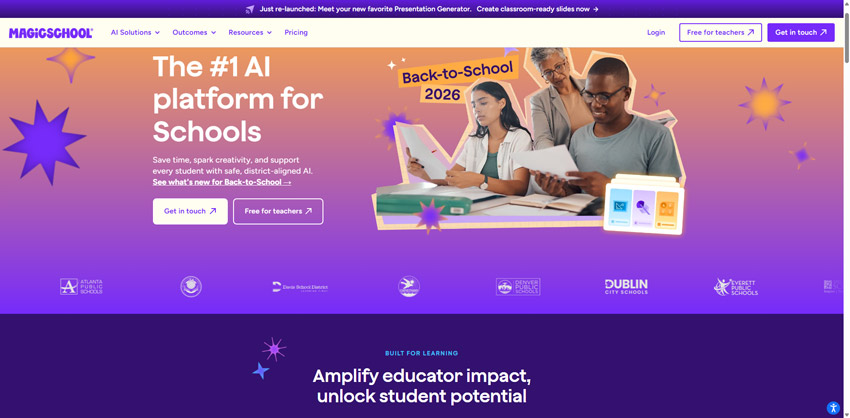
MagicSchool AI is an education-focused platform that helps teachers create lesson plans, worksheets, quizzes, rubrics and differentiated learning materials. Its collection of AI tools is designed to reduce the time educators spend preparing classroom resources. <Cite refs={[“turn422188search2″,”turn422188search3”]}/>
For coaching institutes, this can be useful when preparing topic-wise practice sheets, revision activities and explanations for different student levels. A tutor can provide a topic, learning objective and difficulty level to generate a first draft, then adapt it to the institute’s syllabus and teaching style.
MagicSchool is particularly relevant for educators who regularly prepare similar types of academic resources across multiple batches. Its biggest advantage is bringing several teaching-related tasks into one platform instead of requiring a separate tool for every activity. Tutors should still verify answer keys, calculations and syllabus alignment before distributing materials.
Website Link – https://www.magicschool.ai/
2. Khanmigo
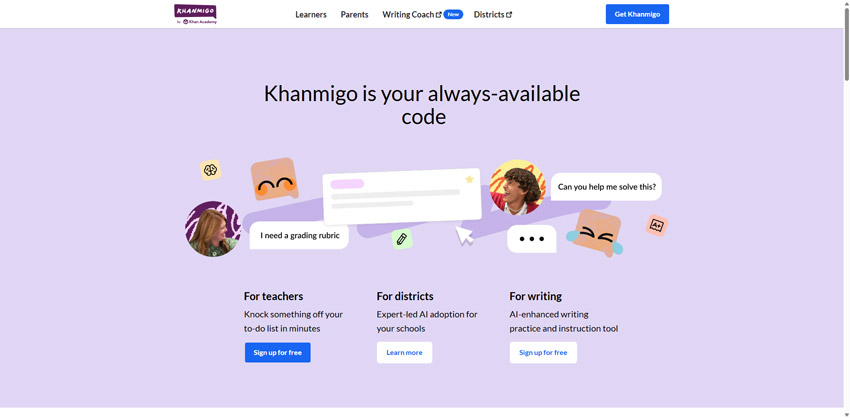
Khanmigo is an AI-powered teaching assistant and learning tutor developed by Khan Academy. It can help educators prepare lessons, create questions, develop rubrics and adapt learning activities. For students, it is designed to guide them through problems and encourage understanding instead of simply providing answers. <Cite refs={[“turn422188search1″,”turn422188search5”]}/>
For tutors, Khanmigo can support lesson preparation and concept revision. An educator teaching mathematics, science or humanities can use it to explore different explanations, generate practice questions and identify ways to help students who are struggling with a topic.
Its guided-learning approach can be valuable for students who need help understanding the steps behind an answer. The aim should be to develop independent thinking, not make students dependent on AI-generated solutions.
Availability differs between teacher and learner accounts, and some student features have age, location or account restrictions. Coaching institutes should check current eligibility before planning a classroom rollout.
Website Link – https://www.khanmigo.ai/
3. Quizizz AI
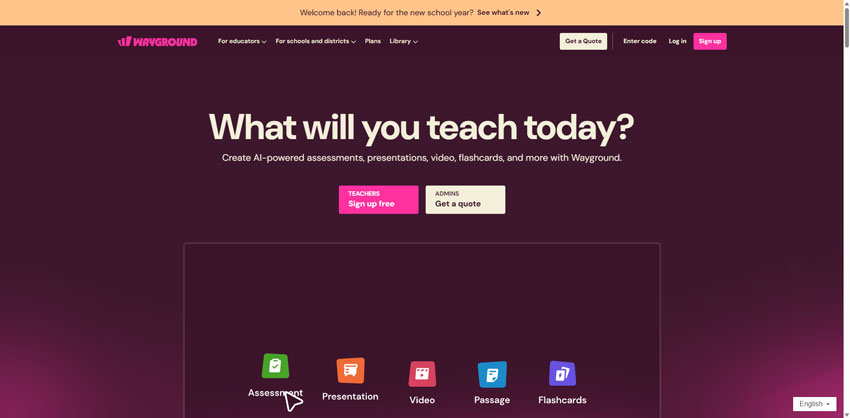
Quizizz, now part of the Wayground learning platform, offers AI-assisted features that help educators create quizzes, lessons and learning activities. Its AI tools can generate questions from existing content, adapt questions and support interactive assessments. <Cite refs={[“turn422188search9”]}/>
For coaching classes, regular testing is an important part of understanding whether students have mastered a topic. Tutors can use AI-assisted quiz creation to develop topic-wise MCQs, revision tests and quick classroom assessments without writing every question manually.
Interactive quizzes can also make revision more engaging, particularly when students are preparing for school examinations or competitive tests. Teachers can review results to identify topics that need additional explanation or practice.
AI-generated questions should always be checked for accuracy, ambiguity and the correct difficulty level before being used in an important test. This is particularly important for entrance examinations, where a flawed question or incorrect answer key can confuse students.
Website Link – https://wayground.com/
4. Canva for Education
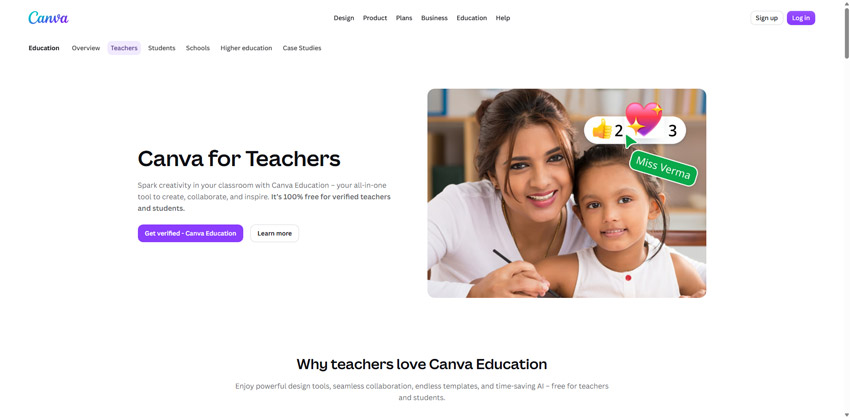
Canva for Education combines design tools with AI-assisted content creation to help educators develop presentations, worksheets, quizzes and visual learning materials. Its AI features can support writing, activity creation and the transformation of lesson content into more engaging educational resources. <Cite refs={[“turn422188search6”]}/>
For coaching institutes, visual materials can make complicated topics easier to explain. Tutors can create diagrams, process charts, formula sheets, revision posters and presentation slides that students can use during class or while studying at home.
Canva can also help institutes maintain consistent branding across notes, presentations and promotional material. This can be useful for teachers who want professional-looking resources without hiring a designer for every task.
Its main strength is helping tutors turn subject knowledge into clear, visually organized teaching materials. Educators should ensure that diagrams, labels, equations and factual details are correct before sharing the finished resources with students.
Website Link – https://www.canva.com/education/
5. ChatGPT
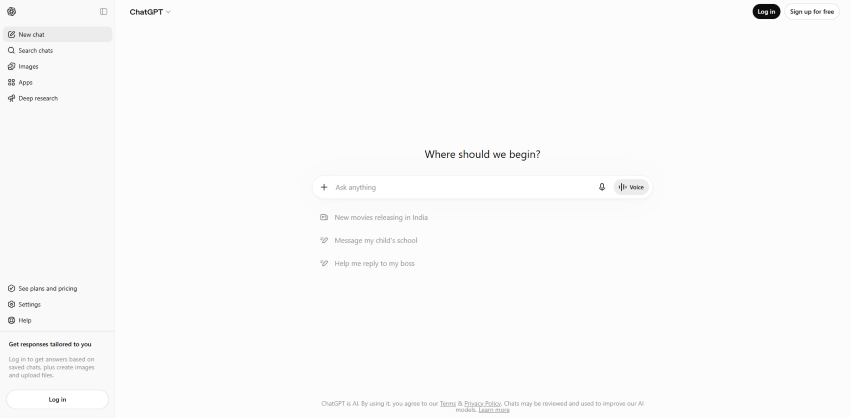
ChatGPT can act as a flexible AI assistant for tutors and coaching institute owners. It can help create lesson outlines, explain concepts at different levels, generate practice questions, prepare revision notes, draft parent messages and brainstorm classroom activities.
For example, a tutor preparing students for a mathematics examination could ask ChatGPT to generate practice questions on a particular chapter, with solutions and explanations. A language tutor could use it to create grammar exercises, while a science teacher could request analogies to explain a difficult concept.
It can also support the business side of coaching classes. Owners can use it to draft course descriptions, create admission announcements, prepare social media content and organize frequently asked questions from prospective students.
ChatGPT works best as a preparation assistant: tutors should verify the answers, adapt the explanations and ensure the material matches the relevant syllabus or examination pattern. Avoid entering identifiable student records or confidential information unless the use complies with applicable privacy requirements.
Website Link – https://chatgpt.com/
Why Coaching Classes Have to Use AI Tools in 2026
Coaching institutes face increasing pressure to provide quality teaching, regular assessments and timely student support. Tutors must often prepare multiple batches, answer repeated doubts and create fresh practice material throughout the academic year. AI can help reduce the time required for these activities.
Another advantage is the ability to create different explanations for the same concept. Some students learn better through worked examples, while others benefit from diagrams, short summaries or additional practice questions. AI can help tutors prepare these variations while the teacher decides which approach suits each learner.
AI can also support the business operations of coaching institutes. From admission-related communication to promotional content and parent updates, many routine tasks can be drafted or organized more efficiently.
However, adopting AI should not mean using every available tool. Coaching institutes should choose tools that solve specific problems, protect student information and fit naturally into their existing teaching process. Teachers must also establish clear rules for student AI use so that assignments and assessments continue to measure genuine understanding.
FAQ
Q1. What are AI tools for coaching classes?
AI tools for coaching classes are software applications that help tutors create lesson plans, practice questions, revision notes, quizzes, presentations and student learning activities.
Q2. Which AI tool is best for tutors in 2026?
The best option depends on the task. MagicSchool AI supports teaching preparation, Khanmigo offers guided learning support, Quizizz AI helps create assessments, Canva creates visual materials, and ChatGPT assists with a wide range of academic tasks.
Q3. Can AI create MCQs for competitive examinations?
Yes. AI can draft multiple-choice questions and answer explanations. Tutors must check the accuracy, difficulty, syllabus relevance and answer keys before using them in practice tests.
Q4. Can AI help coaching classes improve student performance?
AI can help tutors create extra practice, explain difficult topics in different ways and review assessment results. Better performance is not guaranteed; outcomes still depend on teaching quality, student effort and consistent practice.
Q5. Will AI replace tutors and coaching teachers?
AI can assist with preparation, assessments and routine tasks, but tutors remain important for explaining concepts, motivating students, identifying misunderstandings and providing personal guidance.
Conclusion
AI tools for coaching classes in 2026 can help tutors and institutes prepare lessons, create assessments, explain concepts and produce engaging educational resources more efficiently. MagicSchool AI and Khanmigo support teaching workflows, Quizizz AI helps with interactive assessments, Canva supports visual learning materials, and ChatGPT offers flexible assistance across academic and administrative tasks.
The right tool depends on the subject, student age group, syllabus and teaching format. A small tuition teacher may need help creating notes and worksheets, while a larger coaching institute may prioritize question banks, assessments and consistent resources across multiple batches.
AI should help tutors teach better, not encourage students to skip the learning process. Combining AI-assisted preparation with experienced teachers, regular practice and personal guidance can help coaching classes create a more effective learning environment.