When talking about AI tools for doctors in 2026, this is really a new era of healthcare with a better diagnosis rate, less administrative burden and improved patient care. These tools include AI for medical documentation, clinical decision support, patient communication, etc., and help doctors do some of the work more efficiently and deliver care without compromising quality.
The growing patient volumes and record-keeping requirements across India and the USA demand smart solutions to ease everyday workflows for healthcare professionals. Cutting-edge AI tools for doctors streamline repetitive jobs, increasing clinical precision and allowing physicians to concentrate on getting patients on the mend.
Advantages of AI Tools for Doctors
- Faster clinical decision-making
- Reduced documentation workload
- Improved patient communication
- Better diagnostic accuracy
- Increased efficiency in daily workflows
Below are the best AI tools for doctors in 2026 & beyond –
1. Abridge
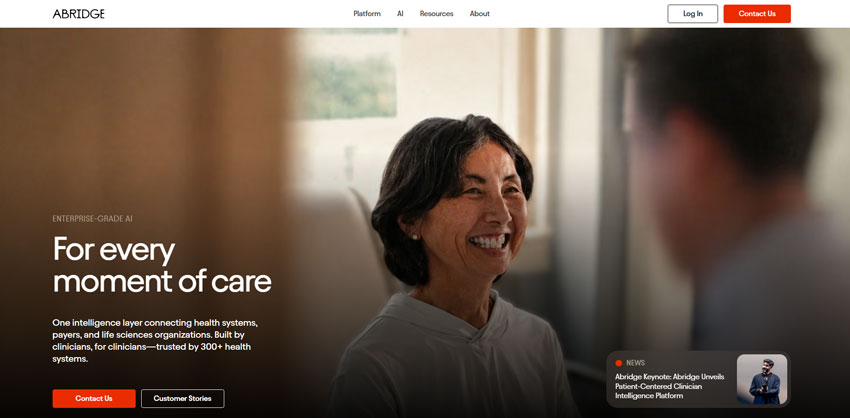
Abridge is an AI-based medical documentation platform that transforms doctor-patient conversations into structured clinical notes. It streamlines documentation time for physicians while accurately preserving medical records.
Automating note-taking allows doctors to spend more time interacting with patients rather than performing administrative tasks. This minimises workflow inefficiencies and physician burnout.
Website Link – https://www.abridge.com/
2. Aidoc
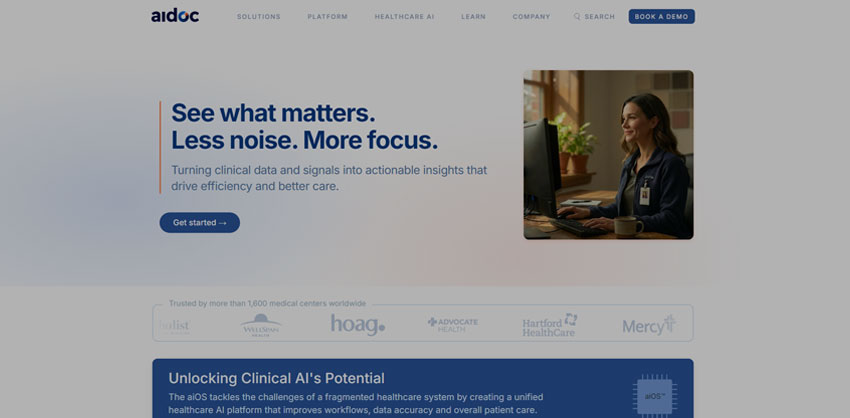
Aidoc is an end-to-end solution that helps doctors and radiologists analyze medical images, including CT scans and X-rays, with advanced AI. It detects important results and assists in putting greater priority on cases that need the earliest clinical attention
The platform enables faster diagnoses and enhances collaboration among healthcare teams, thus helping hospitals provide timely patient care.
Website Link – https://www.aidoc.com/
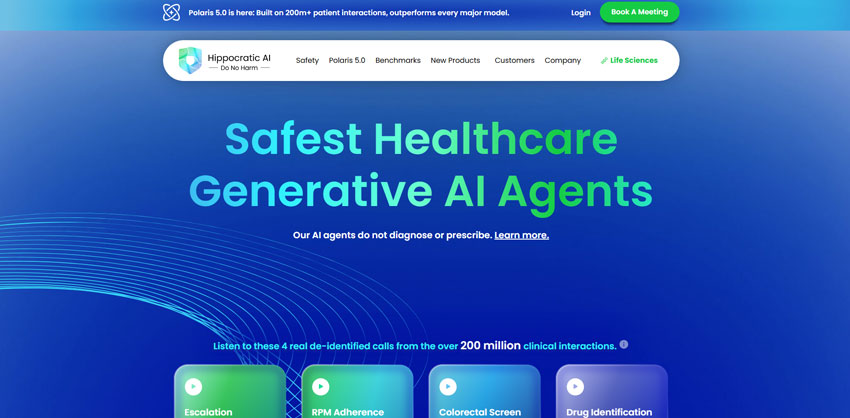
3. Hippocratic AI
It is a healthcare-focused generative AI platform specifically designed to automate routine non-diagnostic patient interaction. It assists with appointment follow-ups, patient education, care coordination, and answering common healthcare questions
This makes it possible for the healthcare services to enhance patient engagement and lessen the administrative burden on doctors and clinical staff.
Website Link – https://hippocraticai.com/
4. Glass Health
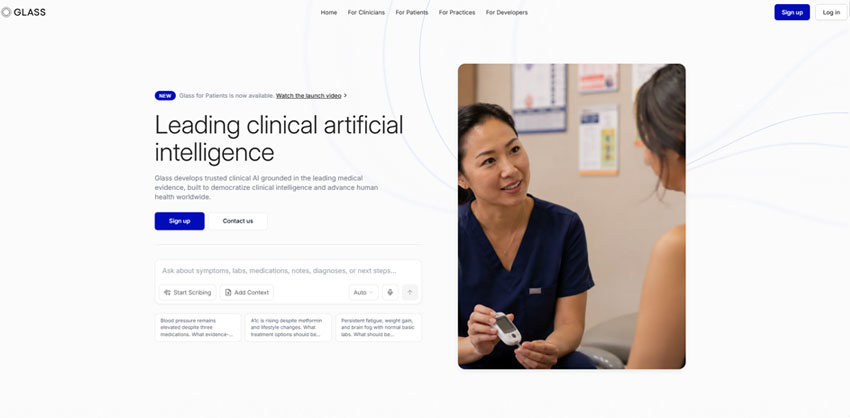
Glass Health is an artificial intelligence (AI) clinical decision-support tool that helps doctors generate differential diagnoses and treatment plans. Doctors can submit patient signs and symptoms and medical history, whereupon they will receive structured clinical recommendations in accordance with the present state of medical knowledge.
The platform provides back-up for clinical reasoning but always retains final diagnosis and treatment decisions under the responsibility of qualified health professionals.
Website Link – https://glass.health/
5. Freed AI
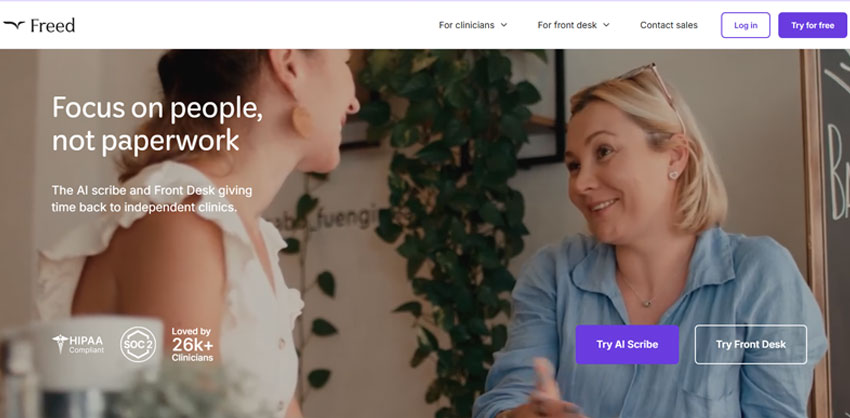
Freed AI is a next-generation AI medical scribe that automatically records clinical documentation at the time of patient visits. It generates visit summaries and structured notes in much more detail, enabling doctors to document visits far more quickly.
This platform helps to mitigate administrative burden and allows physicians to spend more time caring for patients and less time on paperwork.
Website Link – https://www.getfreed.ai/
Why Doctors Have to Use AI Tools in 2026
Healthcare professionals devote a big part of their day to documentation, research, and administrative tasks. Meanwhile, AI tools automate these tasks and strengthen diagnosis support and communication with patients. Train on healthcare-based AI solutions in 2026 – for efficiency, not burnout and personalised care without sacrificing clinical quality.
Conclusion
AI tools for doctors in 2026 will allow for better healthcare outcomes, easier documentation, better diagnoses, and brilliant patient engagement. Based on evidence-based research, Open Evidence to Freed AI for clinical notes automation, they all assist physicians in doing smart work without compromising the highest standard of patient care.
And doctors who embrace healthcare-specific AI are prepared to optimise workflows, minimise administrative overhead and achieve superior clinical results as there will be continued advancements in AI technology.
FAQ
Q1. What are AI tools for doctors?
AI tools include automating documentation for doctors, supporting clinical decision-making, analysing medical images, bolstering patient communication, etc.
Q2. What is the best AI tool for medical documentation?
Abridge and Freed AI are among the leading AI tools for automated clinical documentation.
Q3. Can AI improve medical diagnosis?
Yes. Final medical decisions always rest in the hands of healthcare professionals — AI visual platforms such as Aidoc and Glass Health provide clinical insights to work in conjunction with doctors.
Q4. Can AI tools effectively work for small clinics?
Yes. Numerous AI solutions target individual practitioners in addition to clinics and hospitals of any size.
Q5. Will AI replace doctors?
Absolutely not, because AI is meant for automating repetitive tasks and helping doctors in clinical decision-making, while medical expertise and treating patients will still continue to require a qualified human.