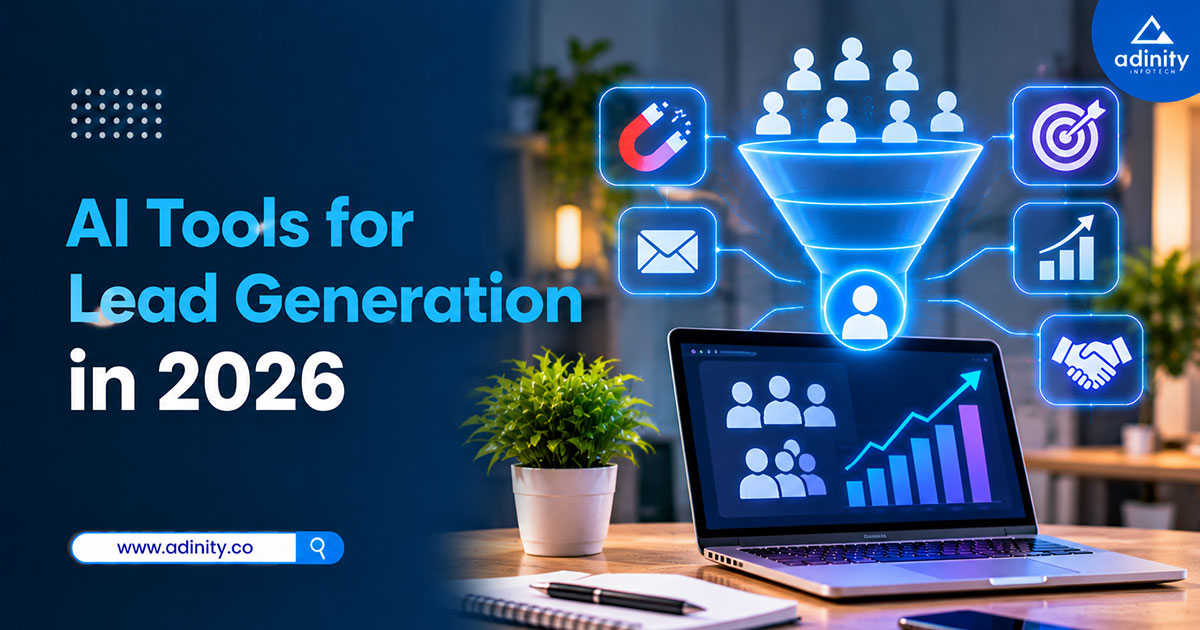
Whether you run a digital marketing agency, SaaS company, ecommerce store, consultancy, or small business, generating quality leads is essential for growth. AI tools can help identify suitable prospects, research companies, personalize outreach messages, and respond to customer enquiries more efficiently.
AI tools for lead generation in 2026 are helping businesses find potential customers, collect contact information, qualify prospects, automate follow-ups, and convert website visitors into sales opportunities. Instead of spending hours searching for prospects and manually sending messages, businesses can use AI-powered platforms to simplify different stages of the lead generation process.
However, generating thousands of contacts does not necessarily mean generating more customers. The real objective is to attract people who are interested in your products or services and have a genuine possibility of becoming paying customers.
Advantages of AI Tools for Lead Generation
Lead generation involves finding potential customers and encouraging them to take an action, such as submitting a contact form, booking a consultation, requesting a quotation, or purchasing a product.
AI-powered tools can make this process more organized by automating research, communication, and lead management activities.
Here are some important advantages:
- Automated prospect discovery: Find potential customers based on industry, company size, location, job title, and other relevant criteria.
- Lead qualification: Analyze available information to identify prospects who match your ideal customer profile.
- Personalized outreach: Generate customized emails and messages based on prospect information and business requirements.
- Faster customer responses: Use AI chatbots to answer common questions and collect visitor details around the clock.
- Improved follow-ups: Automate reminders and communication sequences so interested prospects do not get overlooked.
- Better lead management: Organize contact information, track conversations, and manage opportunities through CRM platforms.
- Reduced manual work: Spend less time on repetitive research and administrative tasks.
- Performance insights: Understand which campaigns, channels, and customer segments generate better-quality leads.
Quick Comparison of AI Tools for Lead Generation
| AI Tool | Best For | Main Benefit |
|---|---|---|
| Apollo.io | B2B prospecting | Contact discovery and sales outreach |
| HubSpot | CRM and inbound leads | Lead management and AI-assisted prospecting |
| Clay | Lead enrichment | Research and customized prospect workflows |
| Tidio | Website lead generation | AI chatbot and visitor engagement |
| Instantly | Cold email outreach | Automated email campaigns and lead discovery |
Below Are the Best AI Tools for Lead Generation in 2026 & Beyond
1. Apollo.io
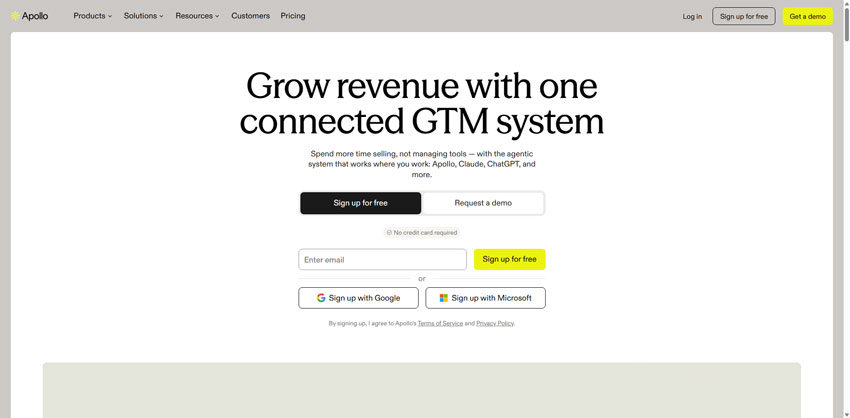
Apollo.io is an AI-powered sales intelligence and prospecting platform that helps businesses discover potential customers and manage outbound sales activities. It combines a B2B contact database with prospect research, data enrichment, and email outreach capabilities.
Users can search for companies and decision-makers using filters such as industry, job title, company size, and location. The platform also provides AI-assisted features that help users research prospects, prepare personalized messages, and organize outreach campaigns.
For example, a digital marketing agency looking for small business clients can use Apollo.io to identify companies in its target industries and find relevant decision-makers. Sales teams can then organize prospects into lists and use outreach sequences to initiate conversations.
Apollo.io is particularly useful because it brings several prospecting activities together in one platform. It also offers a free plan with usage restrictions, making it possible for smaller teams to explore its basic capabilities before upgrading.
However, contact information should always be checked before launching large campaigns. Businesses should also follow applicable privacy, data protection, and email marketing requirements when contacting prospects.
Best for: B2B companies, sales professionals, startups, and digital marketing agencies looking for prospect discovery and outbound lead generation.
Website Link – https://www.apollo.io/
2. HubSpot
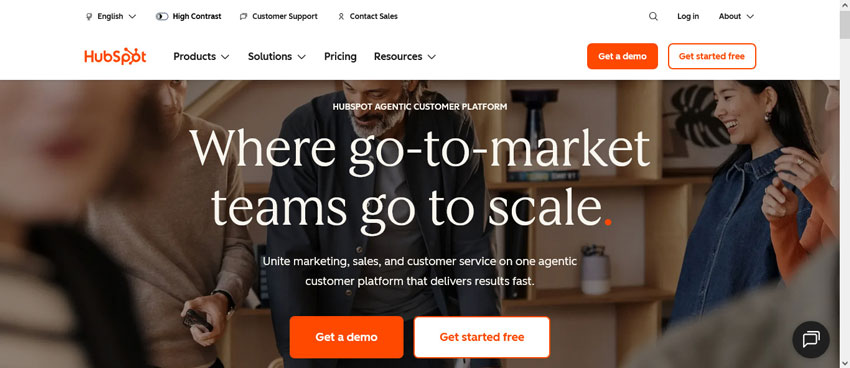
HubSpot is a popular CRM and marketing platform that helps businesses manage customer relationships, marketing campaigns, sales activities, and lead generation. Its AI-powered Breeze capabilities support different customer-facing workflows, including prospect research and sales assistance.
HubSpot can capture leads through website forms, landing pages, marketing campaigns, and other connected channels. Businesses can organize contacts in its CRM, track interactions, and manage follow-up activities throughout the sales process.
Its AI capabilities can assist with tasks such as researching prospects, preparing outreach content, and improving sales workflows. For example, a software company can collect enquiries through a landing page, organize them in HubSpot, and help its sales team prioritize follow-ups.
Another advantage is that marketing and sales information can be managed within a connected platform. This makes it easier to understand how prospects interact with a business before becoming customers.
HubSpot offers free CRM tools, but advanced automation, AI agents, and other premium features may require paid subscriptions or additional usage credits. Review the current plan details before selecting features for your business.
Best for: Small businesses, SaaS companies, marketing teams, and organizations that want to manage leads and customer relationships in one platform.
Website Link – https://www.hubspot.com/
3. Clay
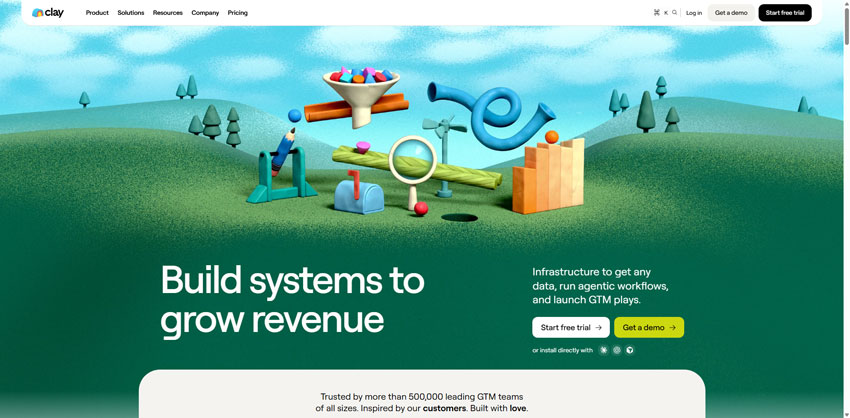
Clay is a powerful platform for researching prospects, enriching contact information, and building customized lead generation workflows. It is particularly useful for businesses that want to combine information from multiple sources instead of relying on a single prospect database.
The platform allows users to create workflows that collect company information, find relevant contacts, enrich records, and use AI to research specific details. Its AI research capabilities can help identify information about businesses and prospects based on defined instructions.
For example, a B2B software company targeting ecommerce businesses could create a prospect list based on industry, company size, technology usage, and other relevant signals. Clay can help enrich those records and prepare information that makes personalized outreach more relevant.
This is especially valuable for sales teams that want to understand why a particular company might be interested in their products or services. Instead of sending identical messages to every contact, they can use research-based insights to create more specific communication.
Clay offers a free plan with limited credits, while advanced workflows and larger usage requirements may need a paid subscription. Some integrations and automation capabilities also depend on the selected plan.
Best for: B2B sales teams, growth marketers, startups, and agencies that need advanced prospect research and lead enrichment.
Website Link – https://www.clay.com/
4. Tidio
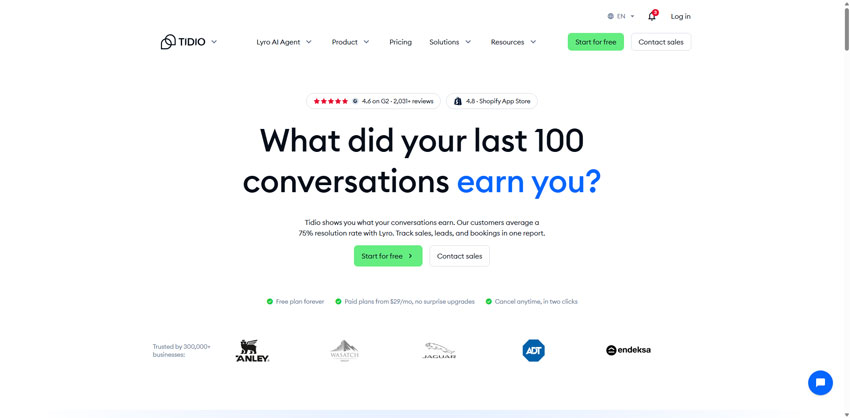
Tidio is a customer communication platform that combines live chat, chatbot automation, and AI-powered customer support features. It can help businesses engage website visitors and collect potential leads through automated conversations.
Its Lyro AI agent can respond to customer questions using available business information. Businesses can also configure chat experiences to collect details such as names, email addresses, and customer requirements.
For example, an online service provider can use a website chatbot to answer questions about pricing, services, and availability. When a visitor expresses interest, the conversation can help collect contact details so the sales team can follow up.
This approach is particularly useful because website visitors may leave without contacting a business if they cannot find the information they need. A well-configured chatbot can provide immediate assistance and encourage interested visitors to take the next step.
Tidio is suitable for businesses that want to improve website engagement without requiring a large customer support team. However, chatbot responses should be reviewed regularly, and businesses should make it easy for visitors to contact a human representative when necessary.
Free access and AI conversation limits depend on the current plan.
Best for: Ecommerce stores, service businesses, online retailers, and companies that want to capture leads through website conversations.
Website Link – https://www.tidio.com/
5. Instantly
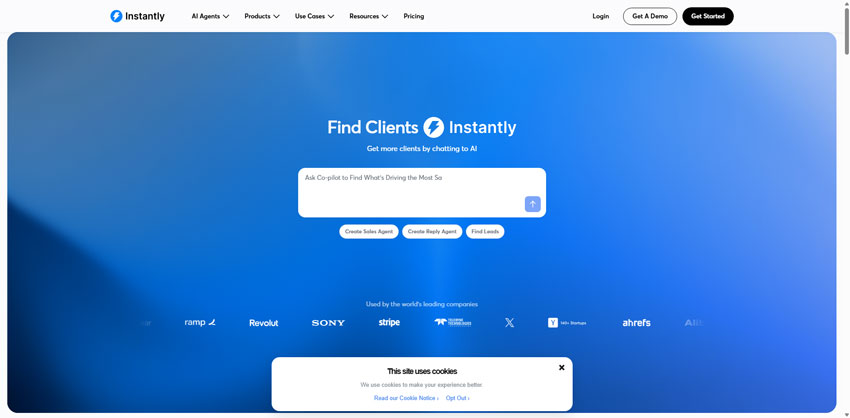
Instantly is a sales engagement platform designed to help businesses manage cold email outreach and generate B2B sales opportunities. It provides tools for email campaign management, prospect discovery, deliverability workflows, and AI-assisted communication.
Businesses can use Instantly to organize prospect lists, prepare email sequences, and automate follow-ups. Its AI-related capabilities can support tasks such as writing outreach messages and handling parts of the email communication workflow.
For example, a web development agency looking for new clients can build a list of businesses that may need website improvements. The agency can then create personalized email campaigns explaining relevant services and inviting prospects to discuss their requirements.
Instantly is particularly useful for teams that rely on outbound email as part of their lead generation strategy. Its platform can help organize multiple campaigns and monitor engagement rather than managing every email manually.
However, cold email requires careful planning. Businesses should use relevant and properly sourced contact data, avoid misleading messages, follow applicable marketing regulations, and provide appropriate unsubscribe options. Email deliverability also depends on domain configuration, sender reputation, and campaign practices.
Best for: B2B companies, consultants, agencies, and sales teams using cold email to reach potential customers.
Website Link – https://instantly.ai/
Why Businesses Have to Use AI Tools for Lead Generation in 2026
Generating consistent leads is one of the biggest challenges for businesses. Traditional lead generation methods often require significant manual effort, especially when researching prospects, responding to enquiries, organizing contact information, and following up with potential customers.
AI tools can help businesses improve these activities by combining prospect research, automated communication, lead qualification, and customer relationship management.
For example, a digital marketing agency can use Apollo.io to discover potential clients, Clay to enrich prospect information, HubSpot to organize leads, and Tidio to engage visitors on its website.
The most effective lead generation strategy is not simply collecting more contacts. It is identifying relevant prospects, understanding their needs, and building a consistent process to convert genuine interest into business opportunities.
How AI Tools Support SEO, AEO, AIO, and GEO
AI-powered lead generation can also work alongside a business’s wider digital marketing strategy.
- SEO (Search Engine Optimization): Create search-focused landing pages and helpful content that attract people actively looking for your products or services.
- AEO (Answer Engine Optimization): Answer common customer questions clearly through FAQs, service pages, and educational content.
- AIO (AI Optimization): Organize accurate business information so AI-powered systems can better understand your products, services, and expertise.
- GEO (Generative Engine Optimization): Publish useful, trustworthy content that strengthens your brand’s online presence and may help it become a relevant source in generative search experiences.
These strategies can support organic discovery and customer acquisition, but they do not guarantee leads or visibility in AI-generated answers.
FAQ
Q1. Which is the best AI tool for lead generation in 2026?
Apollo.io is a strong option for B2B prospecting and outbound sales. HubSpot is useful for CRM-based lead management, Clay supports advanced prospect research, and Tidio helps businesses capture website enquiries.
Q2. Can AI generate leads automatically?
AI can automate several lead generation activities, including prospect discovery, contact enrichment, chatbot conversations, lead scoring, and email follow-ups. However, businesses still need a clear target audience, relevant offers, and a process for converting prospects into customers.
Q3. Are there free AI tools for lead generation?
Yes. Apollo.io, Clay, and HubSpot offer free access to selected features with usage restrictions. Other platforms may provide free trials or limited plans. Check the official pricing pages for current allowances.
Q4. How can small businesses use AI for lead generation?
Small businesses can start by using a CRM to organize enquiries, a chatbot to capture website visitors, and a prospecting tool to identify potential customers. Automating follow-ups and tracking lead quality can make the process more effective.
Q5. Is AI lead generation suitable for B2B and B2C businesses?
Yes. B2B businesses can use AI for company research, decision-maker discovery, and sales outreach. B2C businesses can use chatbots, landing pages, customer segmentation, and automated follow-ups to capture and manage consumer enquiries.
Conclusion
AI tools are making lead generation more organized and efficient in 2026. Apollo.io helps businesses discover B2B prospects, HubSpot supports CRM and inbound lead management, Clay simplifies prospect research, Tidio engages website visitors, and Instantly helps manage outbound email campaigns.
You do not need to use all five platforms. Start by identifying your biggest lead generation challenge. If you need more prospects, consider a prospecting platform. If website visitors are not contacting your business, explore chatbot automation. If your sales team struggles with follow-ups, consider a CRM and outreach solution.
Choose tools that improve lead quality, save time, and support your actual sales process. A smaller number of qualified leads is often more valuable than a large list of contacts who are unlikely to become customers.