

When talking about AI tools for proposal writing in 2026, businesses are finding faster ways to turn client requirements into professional, persuasive proposals. AI can help draft project scopes, explain pricing, organize deliverables, create executive summaries and personalize content for different clients. Instead of starting with a blank document every time, professionals can use AI to prepare a first draft and focus on making the offer more relevant.
Writing a strong proposal takes more than good language. Freelancers, consultants, agencies and sales teams must understand client needs, present a clear solution, define timelines and communicate costs accurately. The best AI proposal writing tools save time without making proposals sound generic or disconnected from the client’s actual requirements.
Advantages of AI Tools for Proposal Writing
Proposal writing often involves repeating similar sections for different clients. AI can help organize this information, improve clarity and reduce the time spent on formatting and drafting.
- Faster creation of proposal drafts
- Better organization of project scopes and deliverables
- More personalized client communication
- Consistent formatting and brand presentation
- Easier reuse of approved content
- Faster preparation of pricing explanations
- Improved collaboration and proposal tracking
| Proposal Writing Task | How AI Can Help |
|---|---|
| Executive summary | Draft a concise project overview |
| Scope of work | Organize tasks and deliverables |
| Pricing explanation | Present supplied costs clearly |
| Client personalization | Adapt content to client requirements |
| Design and formatting | Create polished proposal layouts |
| Follow-ups | Draft professional follow-up messages |
AI can improve the proposal-writing process, but the final proposal still needs accurate pricing, realistic timelines and a solution tailored to the client.
Below are the best AI tools for proposal writing in 2026 & beyond –
1. ChatGPT
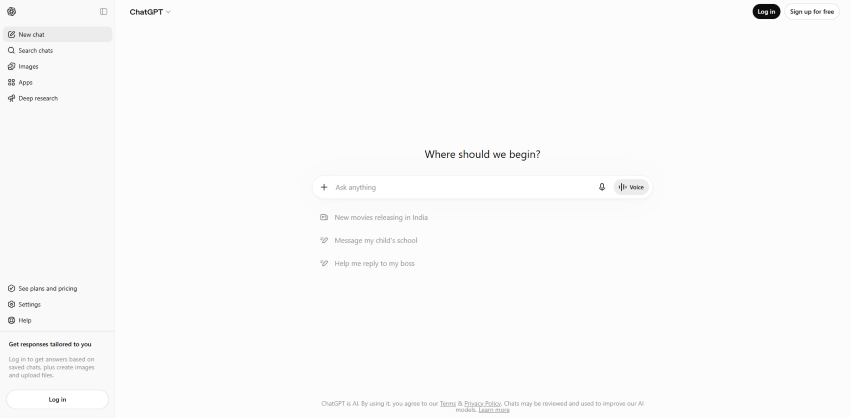
ChatGPT is a flexible AI writing assistant that can help freelancers, consultants and businesses prepare proposal drafts from client briefs, meeting notes and project requirements. It can generate executive summaries, scope-of-work sections, project timelines, service descriptions and follow-up emails. Users can also refine the tone to make a proposal more formal, concise or persuasive.
For agencies and freelancers, ChatGPT is particularly useful when every proposal requires a slightly different approach. A digital marketing agency, for example, can use it to organize campaign deliverables, explain reporting processes and prepare a first draft based on a client’s objectives. The user can then add actual pricing, case studies and relevant experience.
ChatGPT is best used for drafting and improving proposal content rather than automatically deciding what a project should cost. Always verify facts, financial details, commitments and deadlines before sending the document to a client.
Website Link – https://chatgpt.com/
2. PandaDoc
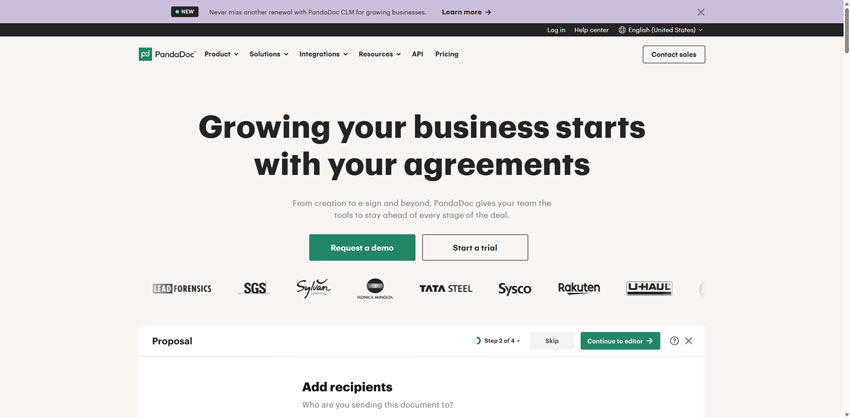
PandaDoc is a document workflow platform that helps businesses create, send, track and sign proposals and other sales documents. It combines document templates, collaboration features, electronic signatures and workflow tools, making it useful for businesses that want to manage more than writing alone.
For proposal writing, reusable templates can help teams maintain consistent branding and avoid rebuilding documents for every prospect. Sales teams can organize service descriptions, pricing tables and standard terms, then customize the document for each opportunity. Tracking features can also help teams understand when a proposal has been viewed and whether follow-up may be needed.
PandaDoc is especially relevant for businesses that regularly send proposals, quotations and contracts. Its main strength is connecting proposal creation with the next steps in the sales process. AI-assisted drafting can help prepare content, but commercial terms and contract language should be reviewed before sending.
Website Link – https://www.pandadoc.com/
3. Proposify
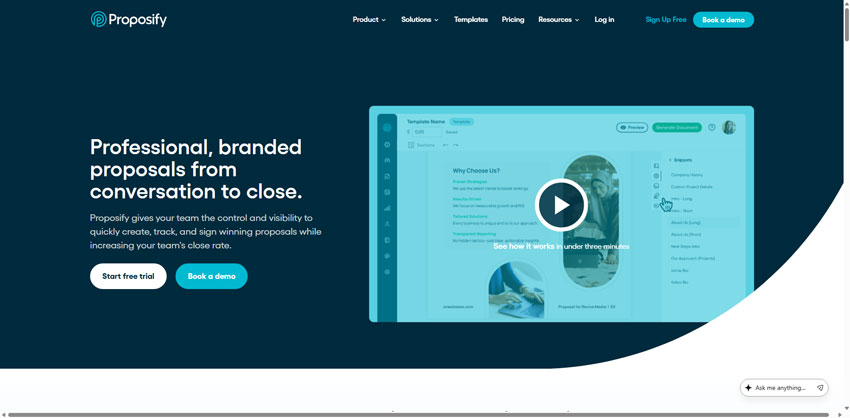
Proposify is proposal software designed to help sales teams and service businesses create professional, branded proposals. It offers customizable templates, reusable content, approval workflows and proposal engagement tracking. Its AI writing features can assist with drafting and refining proposal sections.
For marketing agencies, consultants and B2B service providers, Proposify can make it easier to maintain a consistent presentation across multiple proposals. Teams can reuse approved descriptions of their services, case studies and processes while tailoring the introduction, scope and pricing to each client.
Its tracking capabilities can also help sales teams understand how prospects interact with a proposal, supporting more informed follow-ups. Proposify is particularly useful when proposal quality, team consistency and visibility into the sales process matter. Businesses should compare its workflow features with their current needs before choosing a paid plan.
Website Link – https://www.proposify.com/
4. Qwilr
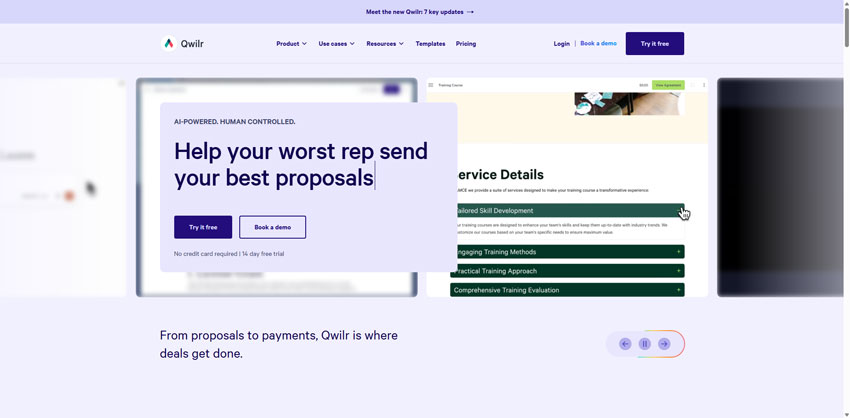
Qwilr helps businesses create interactive, web-based proposals rather than relying exclusively on traditional PDF documents. Its platform supports branded proposal pages, interactive pricing, embedded media and engagement analytics. AI-assisted proposal creation can help users turn a brief into a structured starting point for a client-facing document.
This approach can be useful for creative agencies, consultants and businesses selling services that benefit from visual presentation. For example, a web design agency can present project stages, package options, timelines and examples in one accessible page rather than sending several separate files.
Qwilr can also help make the buying process more convenient by presenting pricing and next steps clearly. It is worth considering when the proposal itself is part of the client experience, not just a document listing costs. Teams should still review every generated section and ensure that scope, pricing and deliverables match the agreed offer.
Website Link – https://qwilr.com/
5. Better Proposals
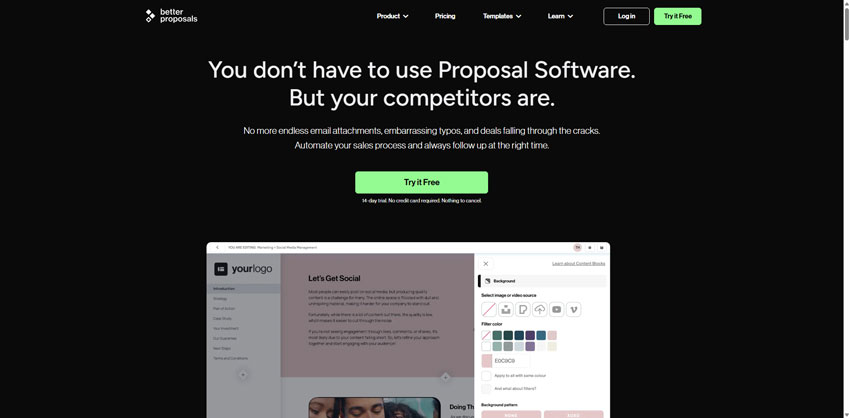
Better Proposals is a proposal creation platform aimed at freelancers, agencies and businesses that want to produce polished documents without a complicated setup. It provides templates, branding options, pricing tables, electronic signatures and proposal tracking. AI-assisted writing can help users develop content for different services and client requirements.
For a freelancer or small agency, the platform can make proposal creation more repeatable. Instead of designing every document from scratch, users can build a template for their main services and customize the project details for each prospect. This is useful for businesses that send similar types of proposals regularly.
Better Proposals is especially relevant when speed, presentation and ease of use are priorities. A reusable template combined with thoughtful personalization can make proposals faster to prepare without making them feel copied and pasted. Before sending, check that all deliverables, exclusions, payment terms and deadlines are correct.
Website Link – https://betterproposals.io/
Why Businesses Have to Use AI Tools for Proposal Writing in 2026
Businesses often spend hours preparing proposals that contain many of the same elements: an introduction, project scope, deliverables, timeline, pricing and terms. AI can help draft and organize these sections, allowing teams to spend more time understanding client needs and refining their offer.
Another benefit is consistency. Templates and approved content can help businesses maintain a recognizable brand voice while reducing errors caused by copying information between documents. Proposal platforms can also make it easier to track engagement, coordinate approvals and manage the transition from a proposal to a signed agreement.
However, speed alone does not make a proposal effective. A proposal should demonstrate that the business understands the client’s problem and can deliver a realistic solution. Generic AI-generated content can weaken trust if it includes vague promises or irrelevant claims.
Businesses should also protect confidential information, check the accuracy of AI-generated statements and ensure that pricing and contractual commitments are approved by the appropriate person. AI should support the sales process rather than make unverified promises on behalf of the business.
FAQ
Q1. What are AI tools for proposal writing?
AI proposal writing tools help users draft, organize, personalize and improve business proposals. Some also provide templates, electronic signatures, document tracking and approval workflows.
Q2. What is the best AI tool for proposal writing in 2026?
The best tool depends on your needs. ChatGPT is useful for flexible drafting, PandaDoc for document workflows, Proposify for sales proposals, Qwilr for interactive web proposals and Better Proposals for template-based documents.
Q3. Can AI write a complete business proposal?
Yes, AI can create a first draft from a detailed brief. However, users must verify pricing, timelines, scope, facts and contractual terms before sending it.
Q4. Are AI proposal writing tools suitable for freelancers?
Yes. Freelancers can use AI to prepare service proposals, project scopes, pricing explanations and follow-up emails more efficiently. Template-based platforms can also help maintain a professional appearance.
Q5. Will AI replace proposal writers?
AI can automate parts of drafting and formatting, but understanding client requirements, developing a persuasive strategy and agreeing on realistic deliverables still require human judgment.
Conclusion
AI tools for proposal writing in 2026 can help businesses draft content faster, improve document presentation and organize the proposal process. ChatGPT is useful for flexible writing assistance, while PandaDoc, Proposify, Qwilr and Better Proposals offer more structured ways to create, send and manage client-facing proposals.
The right choice depends on the type of work involved. Freelancers may prefer a simple template-based platform, while growing sales teams may need approval workflows, engagement analytics and integrations with their existing systems.
The strongest proposals combine AI-assisted efficiency with genuine client understanding, accurate details and a clear business case. Use AI to speed up preparation, then apply human judgment to make the proposal specific, credible and easy for the client to evaluate.